Fuel
Eat like it matters
Nutrition is the difference between fading on 70 minutes and running the game out. These are the numbers professional footballers actually work to.
KICKPATH provides educational training and nutrition guidance, not medical advice. If you have pain, an injury, or a health condition, speak to a qualified professional such as a doctor, physiotherapist or registered dietitian. KICKPATH is for people aged 16 and over.
Your daily targets
Set your bodyweight and this week's training load. Carbohydrate scales with load; protein stays high to protect muscle through a congested week.
2952
Calories
144g
Protein
432g
Carbs
72g
Fats
2.5L
Fluid
Guidance only, not medical or dietetic advice. Speak to a registered dietitian before making major dietary changes, especially under 18.
The match-day timeline
MD-1
Load the tank
6–8g/kg carbohydrate across the day. Familiar foods only. Hydrate steadily, finish with 500ml before bed.
MD 3–4h
Main meal
2–3g/kg carbs, moderate lean protein, low fat and low fibre. Pasta, rice, chicken, white bread and honey all work.
MD 60min
Top up
30–60g fast carbs: banana, sports drink or a gel. 5–7ml/kg fluid with electrolytes if it's hot.
Half time
Hold intensity
30g carbs plus 300–500ml fluid. A carbohydrate mouth rinse alone lifts late-game sprint output.
MD +30min
Recovery window
1.2g/kg carbs plus 0.4g/kg protein. Milk-based drinks tick both boxes and rehydrate at the same time.
MD +1
Repair
Protein every 3–4 hours, 2g/kg total. Colourful plants for polyphenols. Sleep is the biggest recovery lever you own.
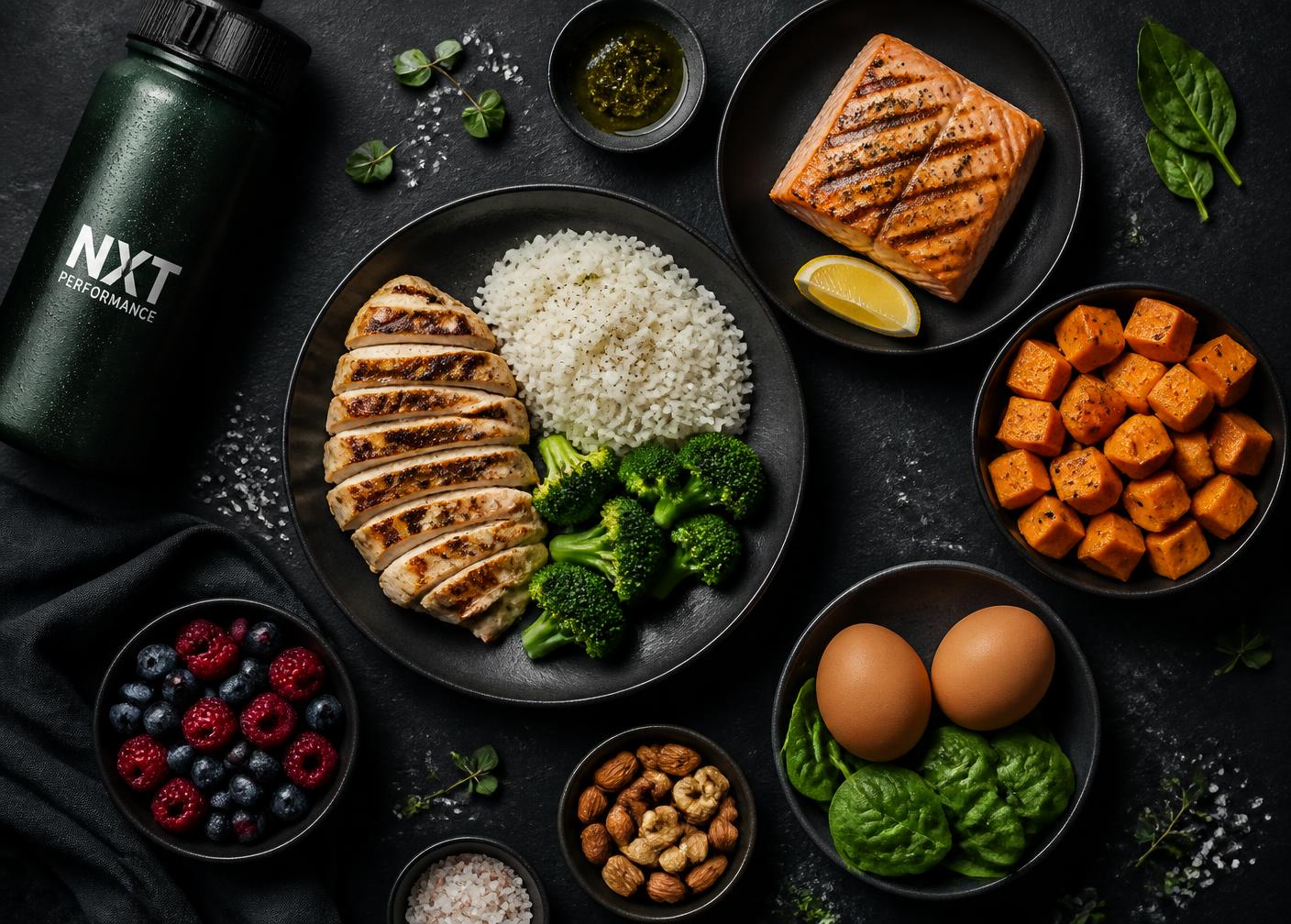
Hard day plate
Half the plate carbohydrate, a palm of protein, a fist of vegetables, a thumb of fat. Add fruit and a milk drink.
Easy day plate
A third carbohydrate, a palm and a half of protein, two fists of vegetables. Keep protein high even when carbs drop.
Non-negotiables
3000–4000 IU vitamin D in winter, iron checked annually if you're female or vegetarian, and creatine 3–5g daily from 18+.
Want this built around you?
The AI coach writes daily fuelling into every session of your seven-day plan.
Get my nutrition plan